
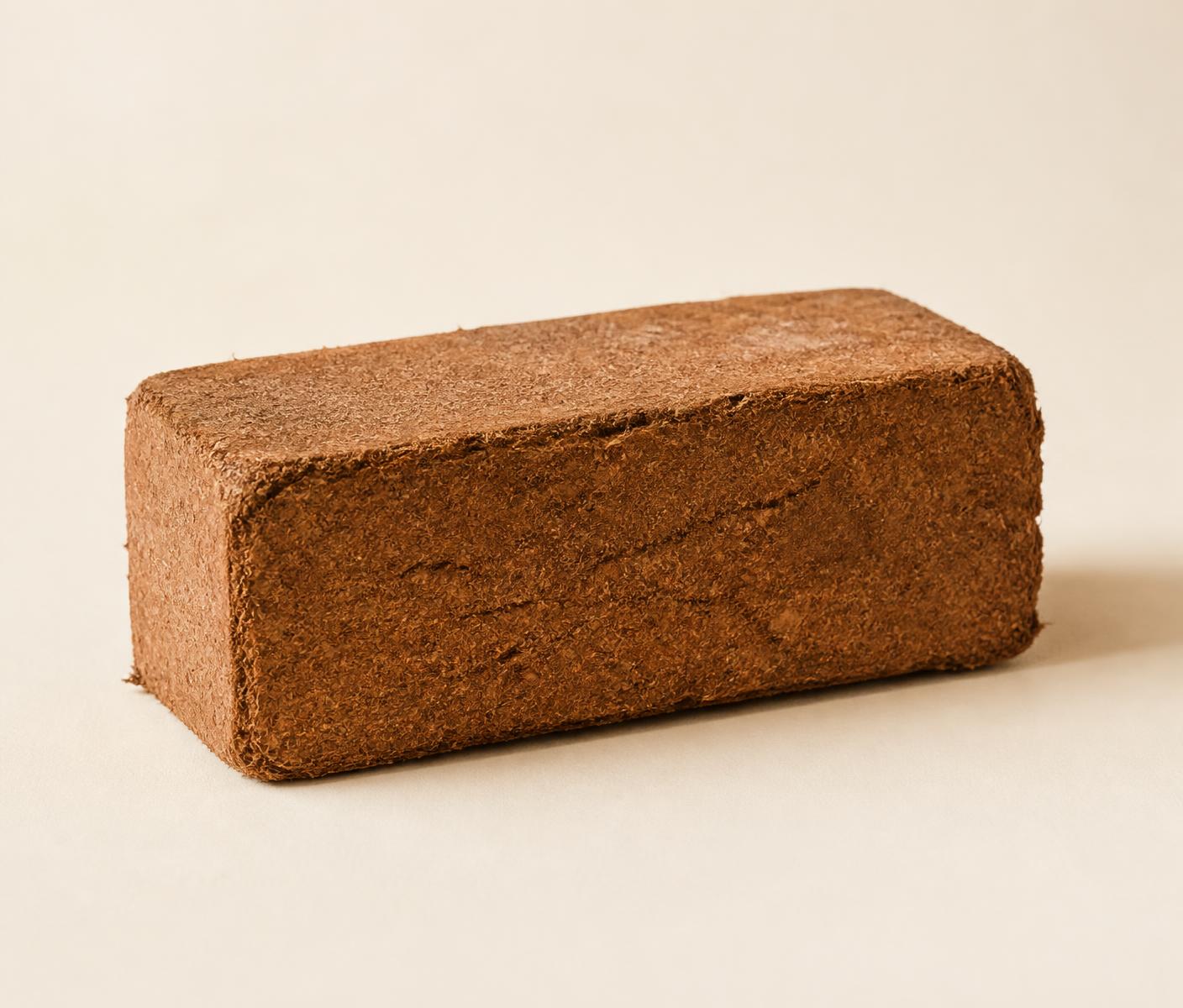
Coco coir can be compressed into blocks, briquettes and other compact formats, significantly reducing its volume during transportation. Once hydrated, the material expands considerably and becomes ready for…
Why Compressed Coco Coir Is Widely Exported
Coco coir can be compressed into blocks, briquettes and other compact formats, significantly reducing its volume during transportation.
Once hydrated, the material expands considerably and becomes ready for use as a growing medium.
This makes compressed coco coir particularly practical for international trade, where transportation efficiency and container utilization are important considerations.
Choosing the Right Coco Coir
Not all coco coir is the same. Before purchasing, growers and importers should consider:
• EC level
• pH
• Particle size / grade
• Fibre and chip content
• Expansion ratio
• Moisture content
• Compression
• Washing and buffering
• Packaging requirements
• Crop and application
The right specification can make a significant difference to growing performance and handling.
From Coconut Husk to Growing Solution
Coco coir has evolved from a by-product of the coconut industry into an important growing-media solution for modern horticulture.
Its combination of moisture retention, drainage, aeration, renewable origin and flexible specifications makes it suitable for growers ranging from home gardeners to large-scale commercial greenhouse operations.
Wrapping Up
At Arjuna Exports, we understand that every market and growing application can require a different specification.
From particle grade and EC requirements to packaging and container loading, we work with buyers to develop the right coco coir supply solution for their needs.
Looking for the right coco coir specification for your market?
Get in touch with our team →