
Private-label coco peat isn't just repackaging an existing product with a new logo. It's a supply decision with several moving parts that need to be planned before the first order goes out, not after. Here's what to think through before you commit.
Product Specification
Before branding is even on the table, the product itself needs to be locked down: grade, EC, moisture, expansion ratio, and washing/buffering level.
Your private-label product is only as strong as the specification behind it, a strong brand can't fix an inconsistent block. This is the step that determines whether repeat customers stay, so it's worth getting right before packaging design begins.
Packaging
Packaging affects more than shelf appeal. It determines protection during freight, shelf life once it reaches the destination market, and how the product is actually handled at retail or by the grower.
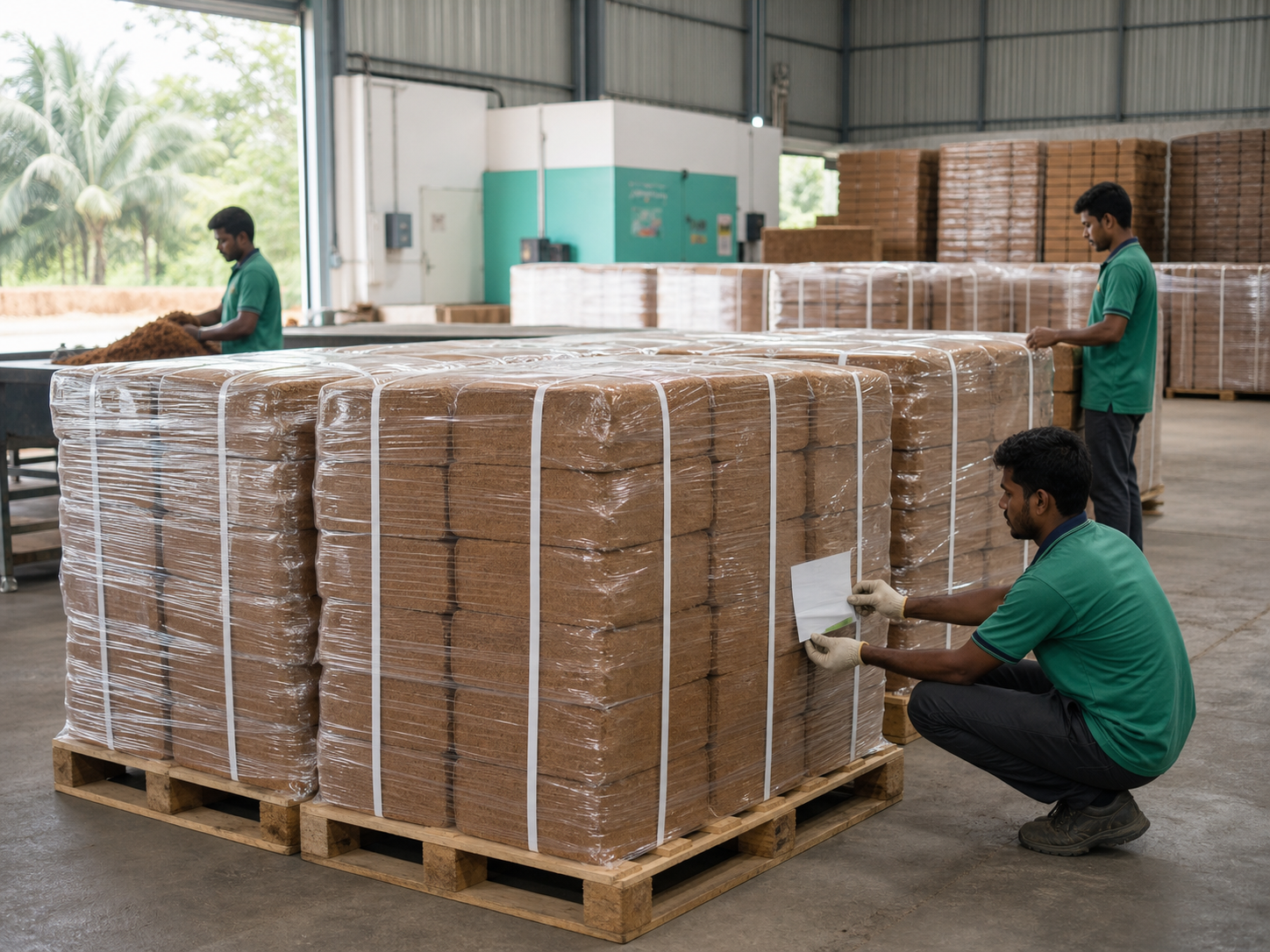
Decide early whether you need shrink-wrapped blocks, printed bags, cartons, or a combination, since packaging choice also affects container loading efficiency.
Branding
Branding covers your logo, colour scheme, messaging, and how the product is positioned against competitors in your target market.
This is where local market expectations matter — what reads as "premium" in one region may not translate the same way elsewhere, so branding decisions are worth making with the destination market in mind, not just head-office preference.
Carton and Bag Design
Beyond the branding itself, the physical design of the carton or bag needs to work for your supply chain: sizing that fits your container plan efficiently, printing that survives humidity and handling, and a format that matches how your buyers actually use the product.
MOQ (Minimum Order Quantity)
Private-label production typically requires a minimum order quantity, since custom packaging and branding involve dedicated production and print runs that aren't cost-effective at small volumes.
Understanding MOQ early helps you plan cash flow and storage and helps set realistic expectations if you're testing a new market before committing to a full container.
Label Requirements
Every destination market has its own labelling rules - language requirements, mandatory information (weight, origin, composition), and sometimes specific certifications or compliance marks.
Confirming label requirements before printing avoids the costly mistake of a completed print run that doesn't clear customs or meet retail requirements at destination.
Market Requirements
Beyond labelling, some markets have additional expectations around certifications, sustainability claims, or documentation that a generic product doesn't need.
Understanding these requirements upfront, rather than discovering them at the port is part of what separates a smooth private-label launch from a delayed one.
Container Planning
Private-label packaging often has different dimensions than standard export packaging, which changes how efficiently product loads into a 20ft or 40ft HC container.
Planning container loading around your specific packaging format, rather than fitting packaging to a generic loading plan after the fact, protects your cost per unit.
Wrapping Up
Private-label coco peat can be a strong way to build your own market presence, but it works best when specification, packaging, branding, MOQ, labelling and container planning are all decided together, not one at a time as issues come up.
Considering a private-label coco peat line for your market? Reach out to Arjuna Exports →