
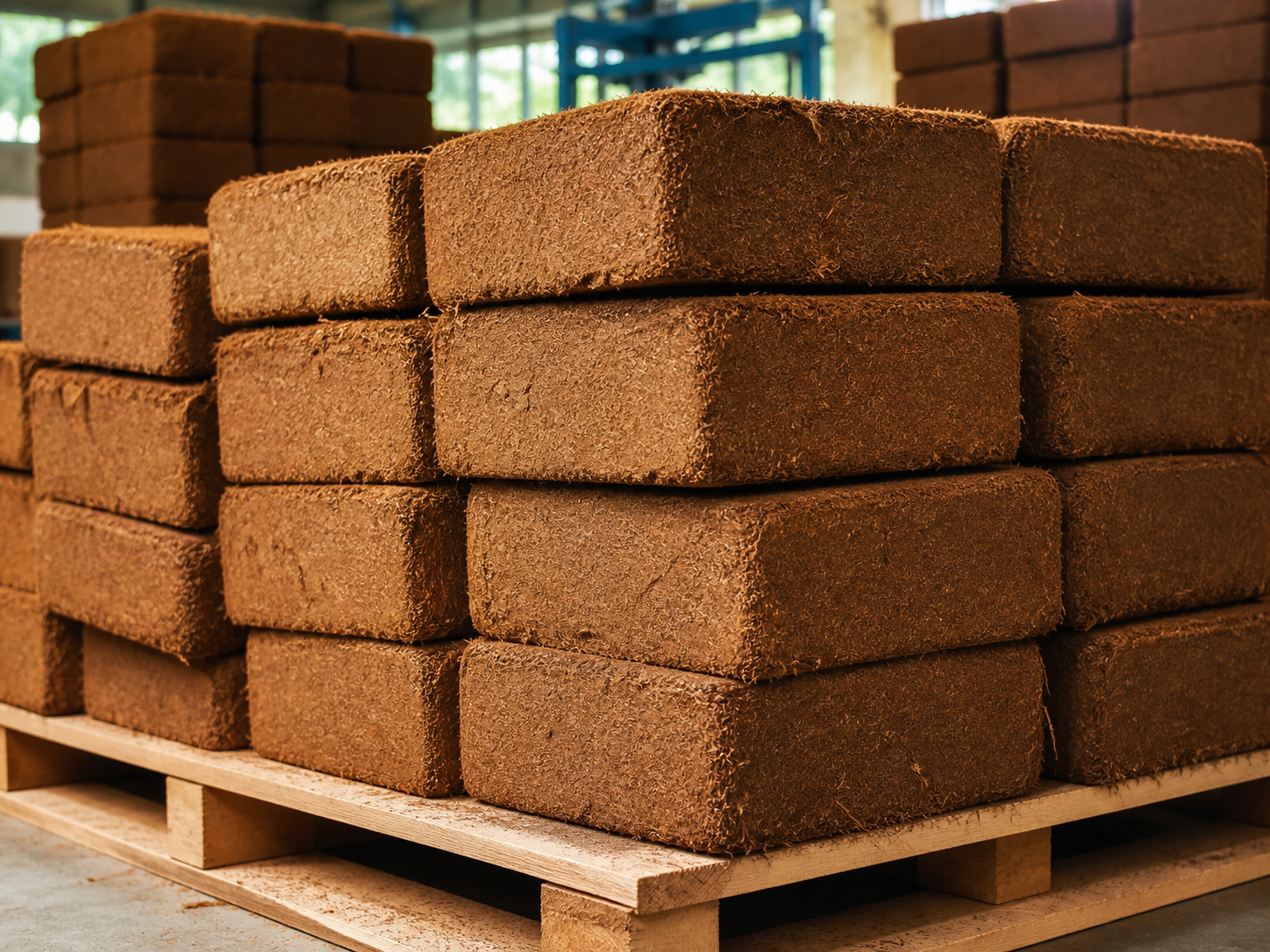
Perlite vs Wood Bark vs Coconut Husk Chips: What Actually Holds Up Under Crop Pressure?
If you're refining your growing media, the real question isn't what's common.
It's what stays consistent under real crop pressure.
Perlite
Strong aeration. Lightweight.
But it's expensive, non-renewable, and can break down in high-humidity nursery environments.
Wood Bark Chips
Good structure and widely used in ornamentals.
However, quality varies, wetting can be uneven, and decomposition often leads to compaction over time.
Coconut Husk Chips
This is where many commercial growers are shifting.
High air porosity for stronger root systems
Excellent drainage without waterlogging
Long-lasting structural stability
Renewable and environmentally responsible
Cost-efficient at commercial scale
The Key Advantage
When blended with coco peat (20 - 40%), husk chips create a balanced root zone, combining moisture retention with consistent oxygen flow.
That balance often outperforms both perlite and bark in long-cycle crops.
It's not just about aeration. It's about structure, sustainability, and predictable performance.
Wrapping Up
If you're reviewing your substrate mix this season, happy to share grading specs and bulk supply details.
Reviewing perlite, bark, or husk chips for your next substrate mix?
Reach out to Arjuna Exports →